
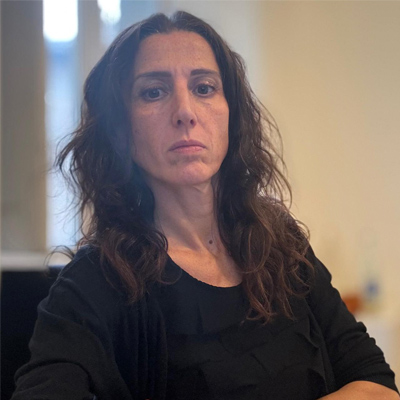
Luana Alessandrini
Luana Alessandrini, Architect is responsible for the Urban Planning Sector – World Heritage – Sustainable Development of the Municipality of Urbino.
It is responsible for the urban baking of Urbino, the management and enhancement of the Historic Center of Urbino World Heritage Site, and activities for environmental sustainability, adaptation to climate change, and mitigation of the city’s climate-altering emissions.
At the beginning of her career, after being a freelancer and teacher, she actively dedicated herself to urban planning and the conservation and enhancement of cultural heritage and began her collaboration with the Municipality of Urbino in 2007. She has been Project Manager for Urbino of the European Life Sec Adapt project since 2014 and of the European Empowering project since 2016; she coordinated Urbino’s membership in the New Covenant of Mayors for Climate & Energy and worked on the drafting of strategic plans and analyses for sustainable energy such as the Addresses for the Location of Plants for the Production of Electricity from Renewable Sources in the city (2010). She followed and coordinated multiple project activities, including the digitization of the General Master Plan of the city drawn up by the Architect Giancarlo de Carlo (2012); the preparation of the General Plan of the Advertising Facilities of Urbino (2011) and the implementation of the Management Plan of the UNESCO Site (2011-2013), creating and organizing the UNESCO Office of the city (2014). It has managed and coordinated national and international projects focused on environmental issues, the management and management of cultural, environmental, and World Heritage Sites under the protection of UNESCO. It also seeks funding for specific projects on these issues and the actual implementation of the funded projects.
Since 2021, it has specialized in managing risks impacting cultural heritage and for several years has been actively engaged in training in the technical and scientific fields related to the active and sustainable conservation of Cultural Heritage, with a strong focus on the connection between cultural, environmental, and intangible heritage, interpreted from a perspective of climate sustainability and adaptation.
It has recently implemented its work area, specializing in the field of Heritage Impact Assessments – Heritage Impact Assessment.
Since 2013, she has been a member of the Technical Scientific Committee of the Association of Italian Heritage and World Heritage Sites, and since 2020, she has been a member of ICOMOS Italia – International Council of Monuments and Sites, a non-governmental organization and advisory body to UNESCO.

